

New words for children — and they stick.
Parauling is a vocabulary game for families, made for primary-school children: English, Catalan and Spanish for now. Every word has a picture and a voice, and is learned in four ways: listening to it, reading it, saying it and writing it.

How it works
One word, four ways to learn it.
Every word is learned by listening to it, reading it, saying it and writing it. A round mixes all four ways into 12 questions, about four minutes, and finishing the day's rounds earns a duckling.
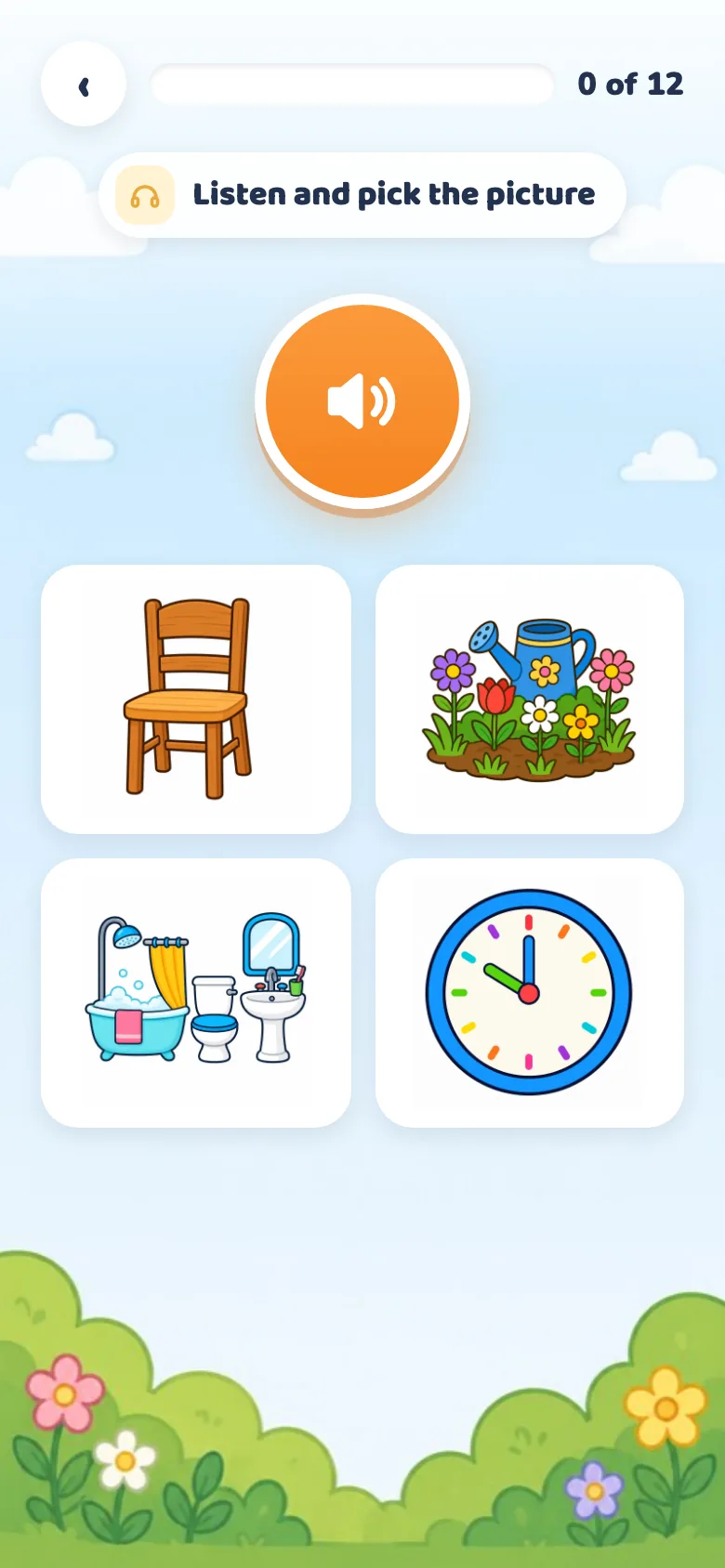
Listen to the word and tap the picture it names.
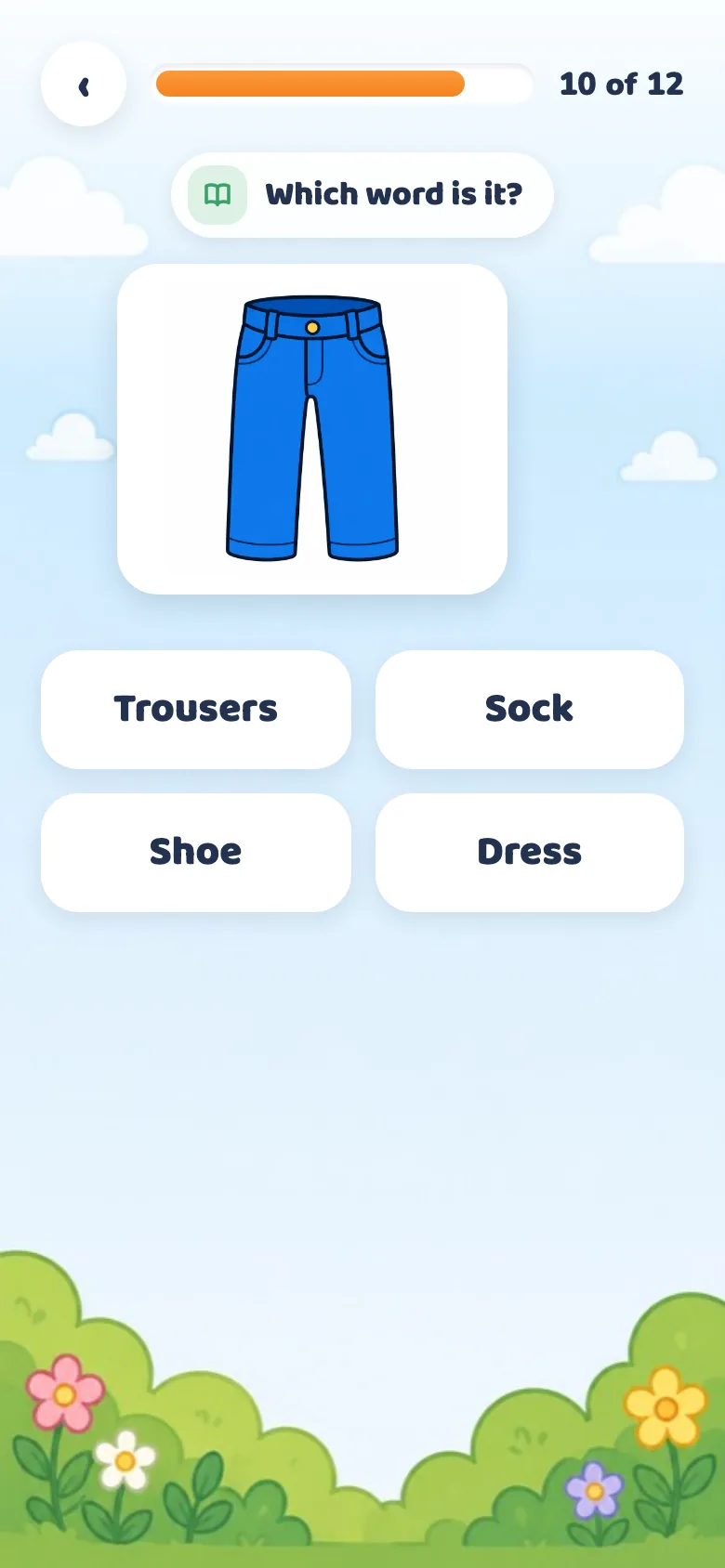
Read the word and pick the picture. Or the other way round: look at the picture and pick the written word.
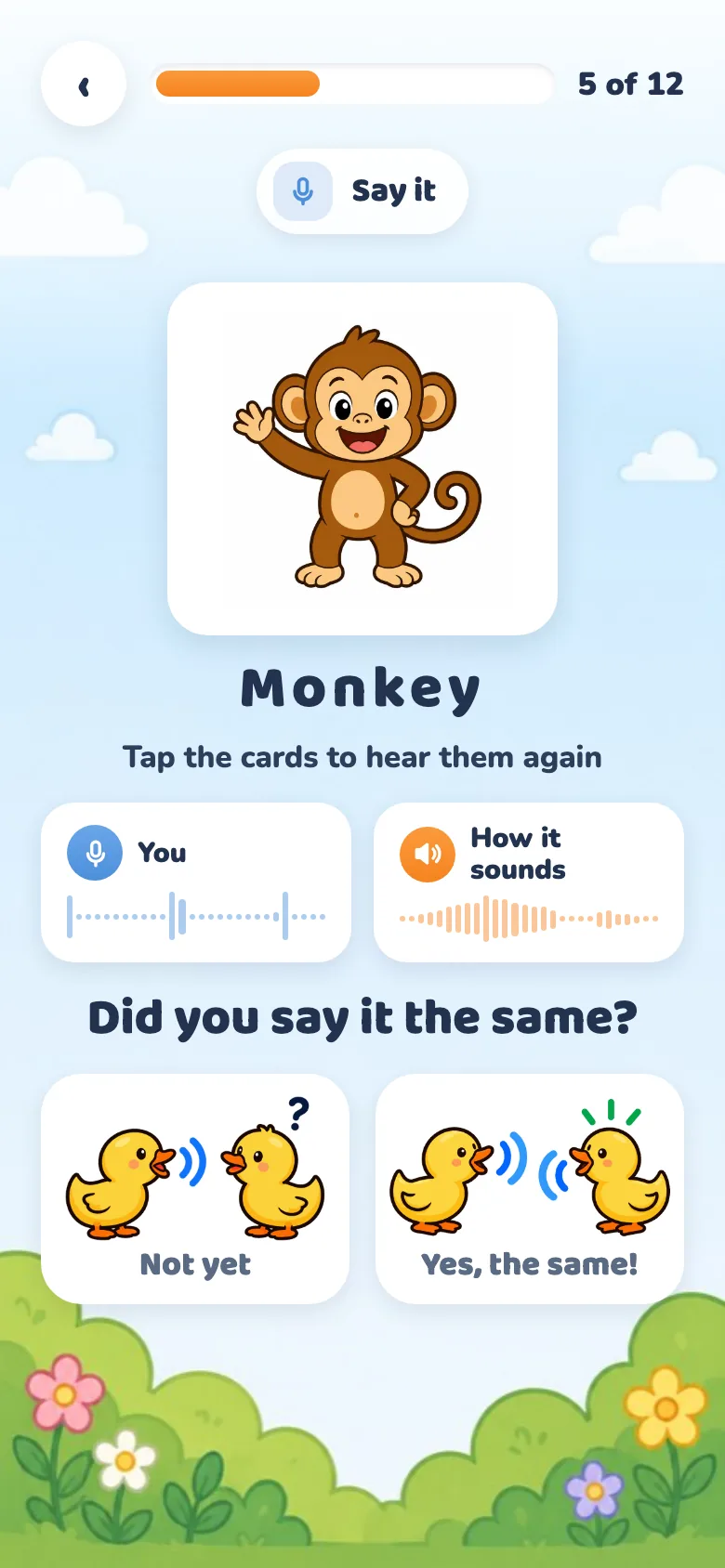
Look at the picture and say it out loud. It records, and then plays their voice and the model, one after the other. Whether they nailed it is up to you: on their own, or with a sibling or an adult listening along. The app never corrects, and the recording never leaves the device.
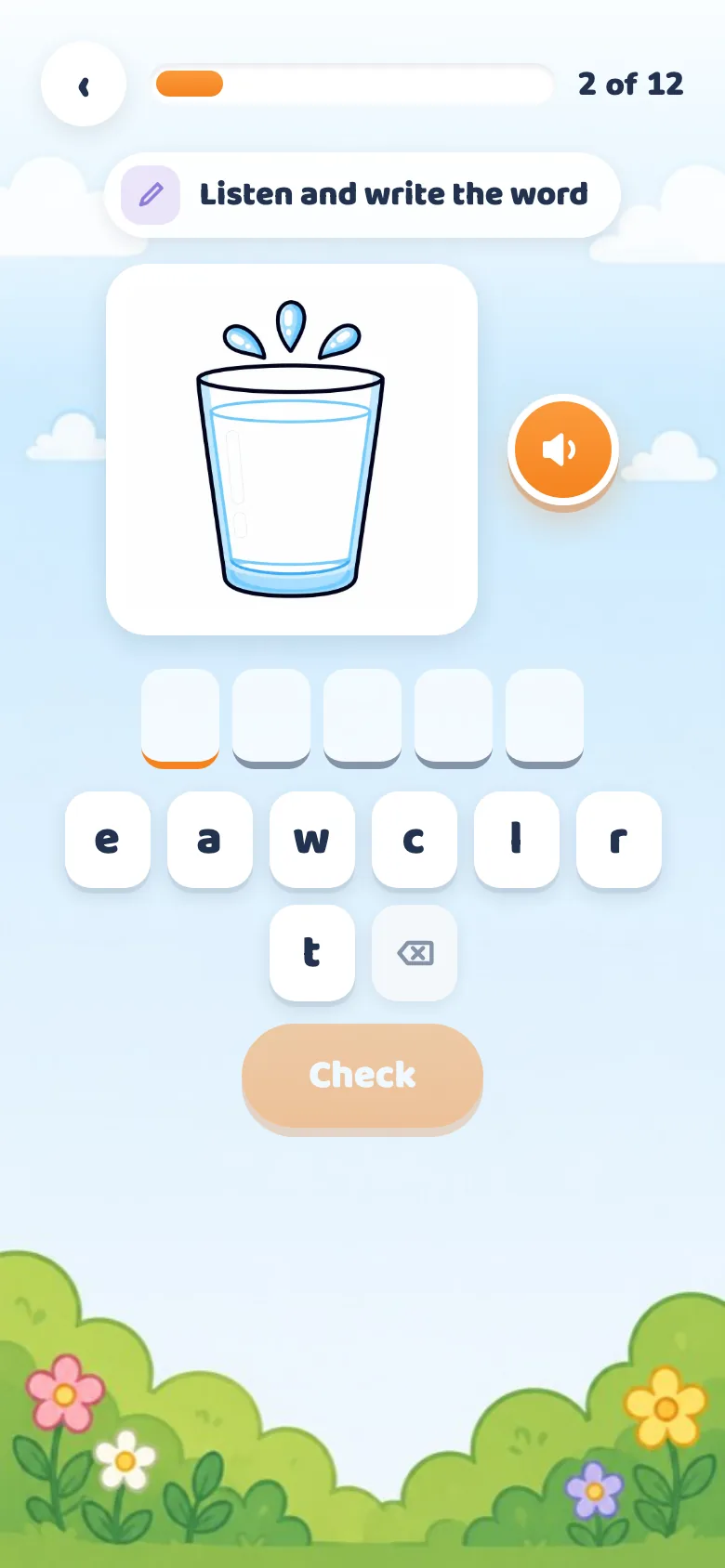
Write the word letter by letter, with help if needed.
Why it sticks
It comes back a few days later.
When a child gets a word right, Parauling brings it back a few days later and, each time they get it right on another day, the wait grows longer. Miss it and it comes back more often, until they get it right a few times in a row. Nobody has to decide what to revise: that's where each day's plan comes from.
It starts with the first colours and numbers — the school words: animals, food, the house — and climbs to B1 vocabulary. As they move on, the day's time goes to the words at their level: the ones far below it stop being revised.

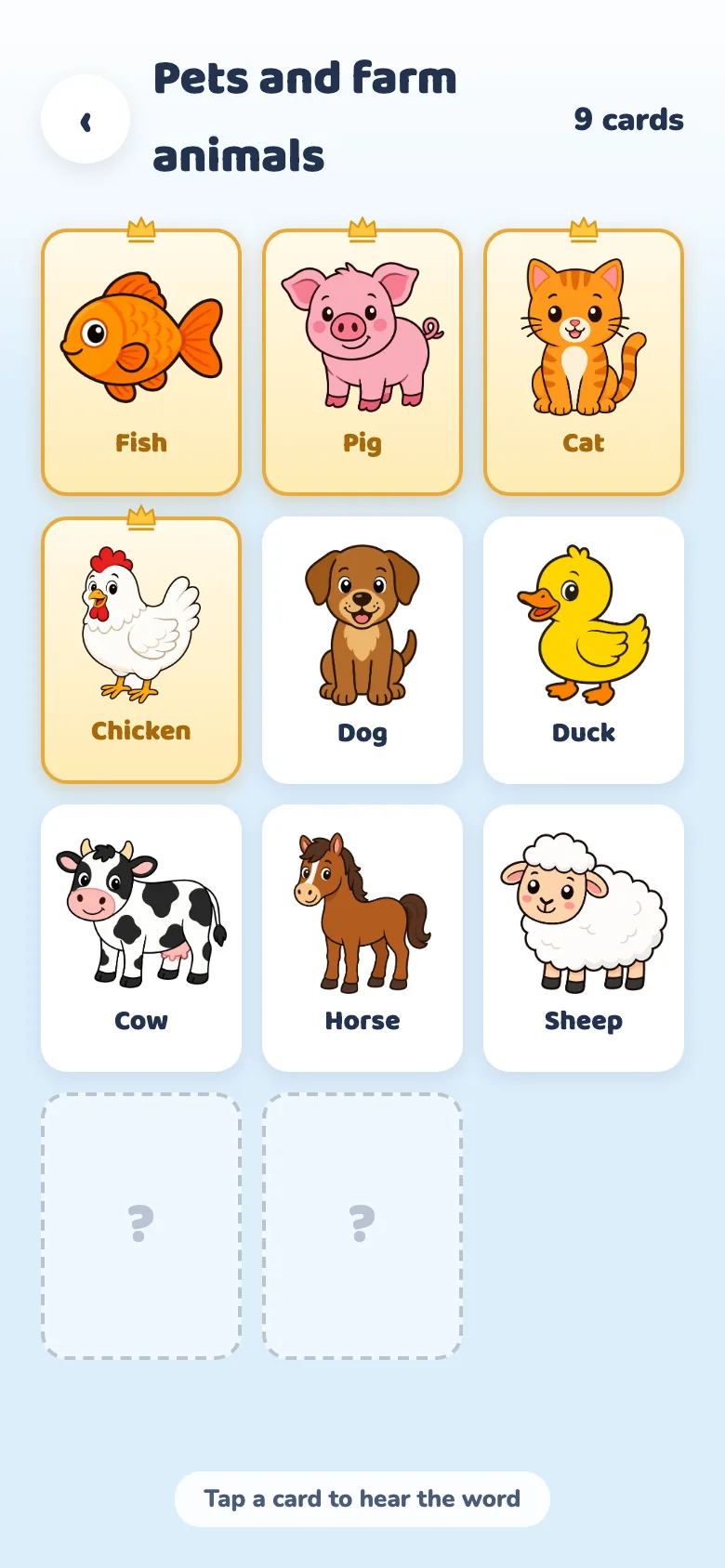

The album and the duckling
An album that grows, and a duckling every day.
Every word learned is a card with its picture. Once they master it in all four ways — listening, reading, saying and writing — the card turns gold. The collections (animals, home, the body, nature, clothes…) fill up, and every ten cards they level up.
The duckling is earned on any day the rounds get done. There are no streaks: skip a day and they lose no duckling and no progress.
The hard words
What about the words you can't draw?
because, never, who, the months, telling the time, an uncle and a cousin. They're hard to draw, which is why a vocabulary app rarely has them. Here they get their own game: sentences — the whole sentence plays and you pick the word that fits — and boards, where you tap who is being talked about: a family tree, a calendar, a clock.
In the album, these cards are the word on a ribbon, with an example sentence. They're earned and turn gold like all the others.
On the Premium plan.
What you won't find
What I left out on purpose.
What makes a word stick isn't playing more: it's seeing it again at the right moment. Everything other apps add to make children play more — streaks, counters, alerts, alarm colours — doesn't make them learn more.
And there's another reason. In real life nobody applauds you every time you do something right, or tells you at every step whether you're doing well or badly. And a streak, for a small child, means having to play so as not to lose it — including on the days they don't feel like it. A day off shouldn't cost anything.
Streaks
No counter that breaks if they skip a day. The duckling is for every day they play, not a punishment for the day they didn't.
Red marks
A wrong answer never shows in red: it's marked as "not that one" and the game goes on. The word is kept aside to work on until they know it.
Ads and in-app purchases
No ads, ours or anyone else's. Kids can't buy anything: subscribing to Premium needs the parents' password.
Trackers
No third-party analytics inside the app. Of your kids we keep only a name, an avatar, their age range if you give it, and what they're learning.
Who it's for
Three ways to use it at home.

Kids learning English
They speak Catalan or Spanish at home. If they can't read yet, the course runs on listening and speaking only: written words arrive when you say so.

First words
For the little ones, with an adult alongside: the Catalan or Spanish course, with a picture and a voice to learn to name everyday things.

Catalan or Spanish as a new language
The same game for anyone who has one and wants the other: at school, at home, newly arrived.
Three courses today: English, Catalan and Spanish. More to come.
There are no levels and no fixed ages: a profile can stay on listening and saying for as long as it takes, and nobody pushes them along.
For parents
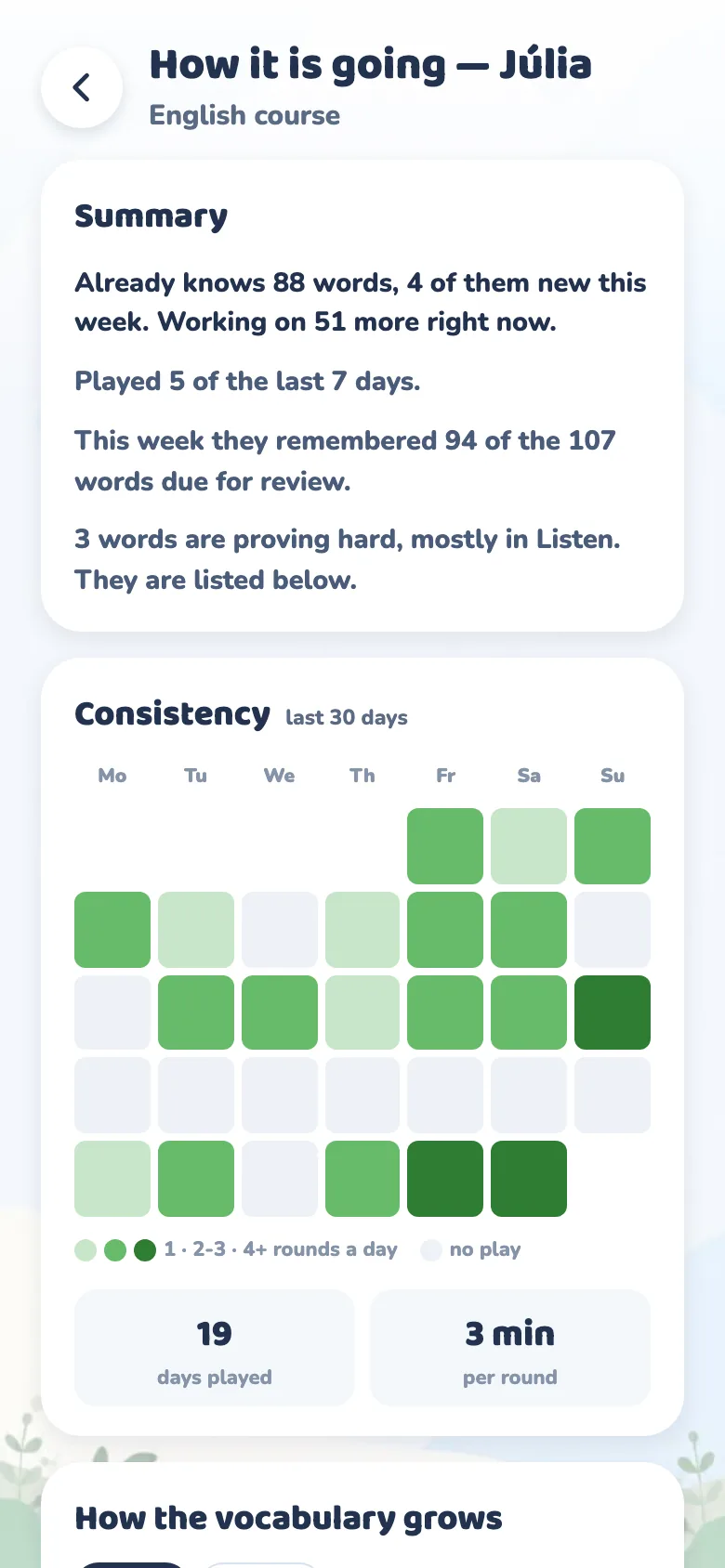
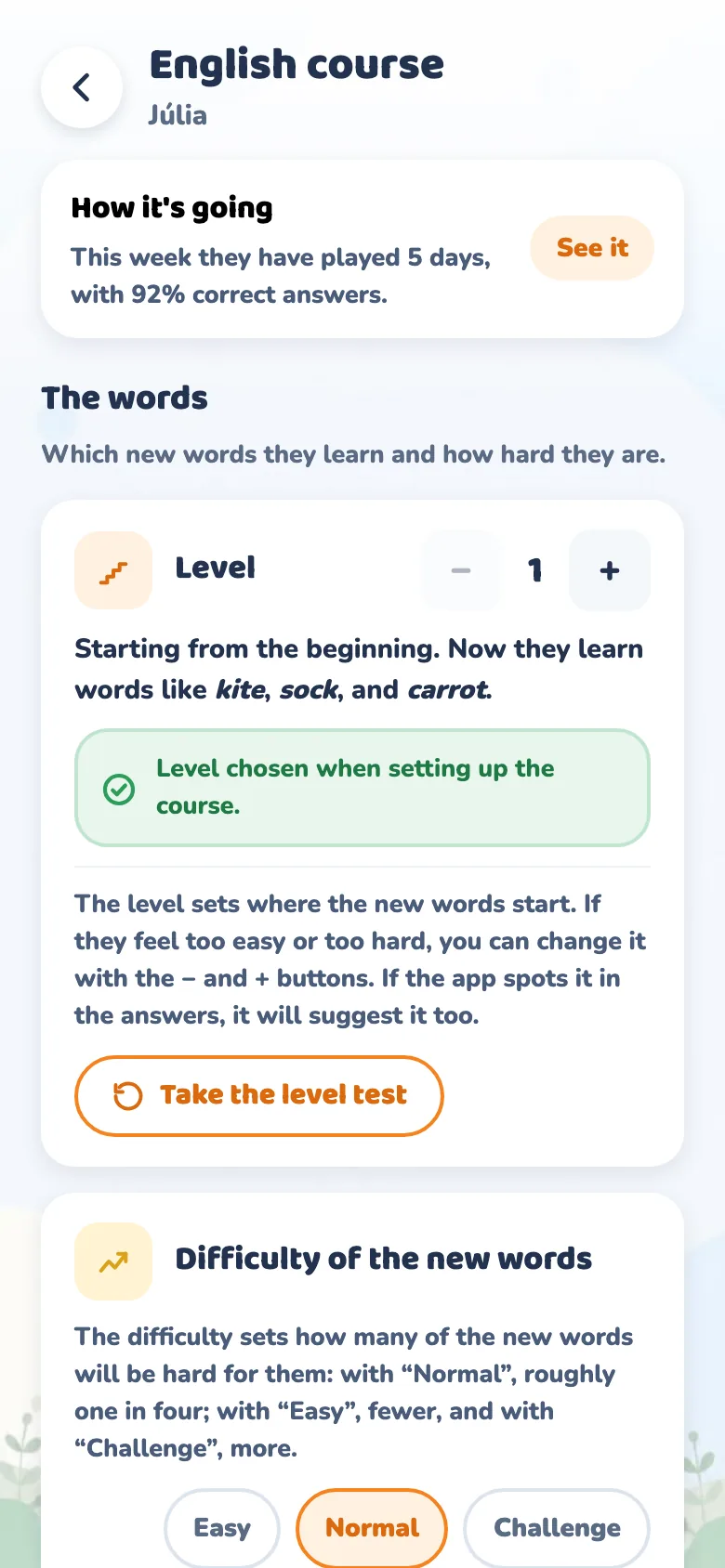
You see how it's going. They only see the game.
marinamele.com
Who's behind it
Who makes it, and who answers for it.
I designed Parauling — I'm Marina Mele — first for my three kids and now for other families. The service is provided by Martrends Apps, S.L., the family company, which is responsible for the account data.
Where the method comes from
I come from research, with a PhD in quantum physics, and I've worked with programming and digital products for more than ten years. Parauling is built on spaced repetition: spreading reviews out over days is one of the most effective ways to remember in the long term. The vocabulary follows the standard levels by age, up to B1, and every picture and every voice is checked one by one: whatever a child doesn't understand gets redone.
The data, and if we ever close
Of the children we keep the name or nickname you give them, their age range if you give it, and what they're learning: it's what the game needs to know what comes up each day. The servers are in Spain, and there are no ads and no trackers.
If we ever close, we'll tell you by email 60 days in advance, refund the unused part of your Premium, and give you a copy of your profiles' data if you ask for it. It's in the terms of use (in Spanish), section 12.
Martrends Apps, S.L. · Tax ID B67505370 · Mataró, Spain · support@parauling.com
Pricing
Free to start. Premium for the whole family.
Free
- One profile
- Three rounds a day
- Four complete collections: “Wild animals”, “Stories and fantasy”, “Transport” and “On the move” (100 words)
- One active course: English, Catalan or Spanish
- All four ways, the album and the progress views, in full
A yearly subscription that renews on its own: we remind you 30 days before, and cancelling is one click. 14 days to change your mind with a full refund. If you leave Premium, all progress stays on the Free plan.
Frequently asked questions
What families ask us.
Who it’s for
What age is it for?
It is made for primary-school children. If they can't read yet, they can play by listening and speaking only, and if a younger one plays, it's best with someone alongside. Older kids go all the way to B1 vocabulary, and an adult can learn with it too.
Does my child need to read?
No. In the profile settings you choose which ways they practise; Read and Write open whenever you say so.
Is it like the language apps everyone knows?
They do different jobs. Language apps teach sentences and grammar, almost always by reading, and they work from about age 8 or 9. Parauling does one thing: vocabulary, with a picture and a voice, asked again a few days later so it isn't forgotten. A child who can't read yet can do this; grammar, not.
Does it help with what they do at school?
As a complement, yes. The words start with the ones covered in primary school — colours, numbers, animals, food, the house, clothes — going up to B1 vocabulary. It doesn't follow any publisher's book or a particular day's homework: what it does is keep the vocabulary from being forgotten, which is usually the hard part.
Can I use it in class, with a whole group?
As it stands, no: an account holds up to five profiles and there's no way to follow a whole class or to share it between families. If you're a school and you're interested, write to us and tell us what you need: we'll try to help.
Who isn't it for?
If you want your child to speak, to follow conversations or to prepare an oral exam, it doesn't do that. It doesn't teach grammar or how to write sentences either. And if what you want is for them to spend a long time on it, no again: it's built so that ten minutes a day is enough.
How it works
How long each day?
A round is 12 questions, about four minutes. Three rounds make about ten minutes. More is not better: reviews work with days, not hours.
Does it teach grammar or conversation?
No. It teaches words and makes them stick. It complements school or classes; it does not replace them.
Which English is it?
One single voice, clear and the same for every word, with an American accent. Later on we'll consider adding a British accent too.
What do A2 and B1 mean?
They're steps of the European framework for languages. In vocabulary terms, A2 is roughly what's covered by the end of primary school, and B1 is secondary-school level. Parauling goes from the first colours and numbers up to B1: not all the words of that last step are in yet, and we keep adding them.
Which devices?
Any browser: phone, tablet or computer. It can be installed on the home screen like an app. It isn't in the app stores yet; we're considering a native one.
Does it work offline?
Not for playing: what comes up each day is decided on the server, so progress is the same on any device. Pictures and sounds already downloaded stay on the device, and the album can be viewed offline if it has been opened before.
Children and safety
Can children buy anything or talk to anyone?
In the play area, no: there's no chat, no other users, nothing to buy and no links out. All the child finds is the rounds and the album. Anything to do with paying lives in the adults area, which opens with a multiplication, and from there yes, there's the link to go Premium on the website, with the account password.
How are the pictures and the voices made?
They are generated with artificial-intelligence tools and then reviewed one by one: the ones a child does not understand are redone, and some changed three or four times until they did. The voice is synthetic, from the provider's catalogue: it is not any real person's voice. Your child never talks to any artificial intelligence: all the content is made beforehand and stored as files in the app.
Is my child's voice recorded?
In Saying it, they can record themselves to hear it right next to the model. The recording never leaves the device: we don't store it, we don't hear it and it goes nowhere; it's gone when they move to the next word. You can turn it off in the course settings. On iPhone, if you've added the app to the home screen, the system asks for permission every time it opens: that's a Safari limitation, and we're considering a native app to remove it.
What about my kids' data?
A name or nickname, an avatar, their progress and, if you give it, their age range. No ads, no trackers, servers in Spain. The account can be deleted from the app.
The account and the price
Can I have more than one child?
With Premium, up to five profiles, each with its own course and pace. On Free, one. If you need more, write to us.
Can we switch courses?
With Premium, each profile can take every course and move between them without losing anything. On Free there is one course: if it has already been played and you pick another, the first one's progress is deleted, cards included.
Can I pay monthly?
Yes: €4.99 a month, to try it out and stop whenever you like. The yearly plan, €29.99 a year, works out cheaper. Both have 14 days to withdraw with a full refund.
What happens if I stop paying?
Premium runs until the end of the period you paid for. After that the account stays on the Free plan with everything saved: album, medals and progress. If you come back, it wakes up right where it was.
Who is behind it, and how does it pay for itself?
Parauling was designed by Marina, and the service is provided by Martrends Apps, S.L., the family company. It pays for itself with subscriptions: no investors, no ads, no data sold to anyone.