
How Parauling works
Parauling teaches words and makes them stick. Every word has a picture and a voice, is learned in four ways and comes back a few days later.
One round, about four minutes
A round is 12 questions, about four minutes, and it mixes the four ways of learning a word. When the day's rounds are done, there's a duckling as a reward. Three rounds take about ten minutes: more isn't better, because revision works over days, not hours.
Four ways to learn each word
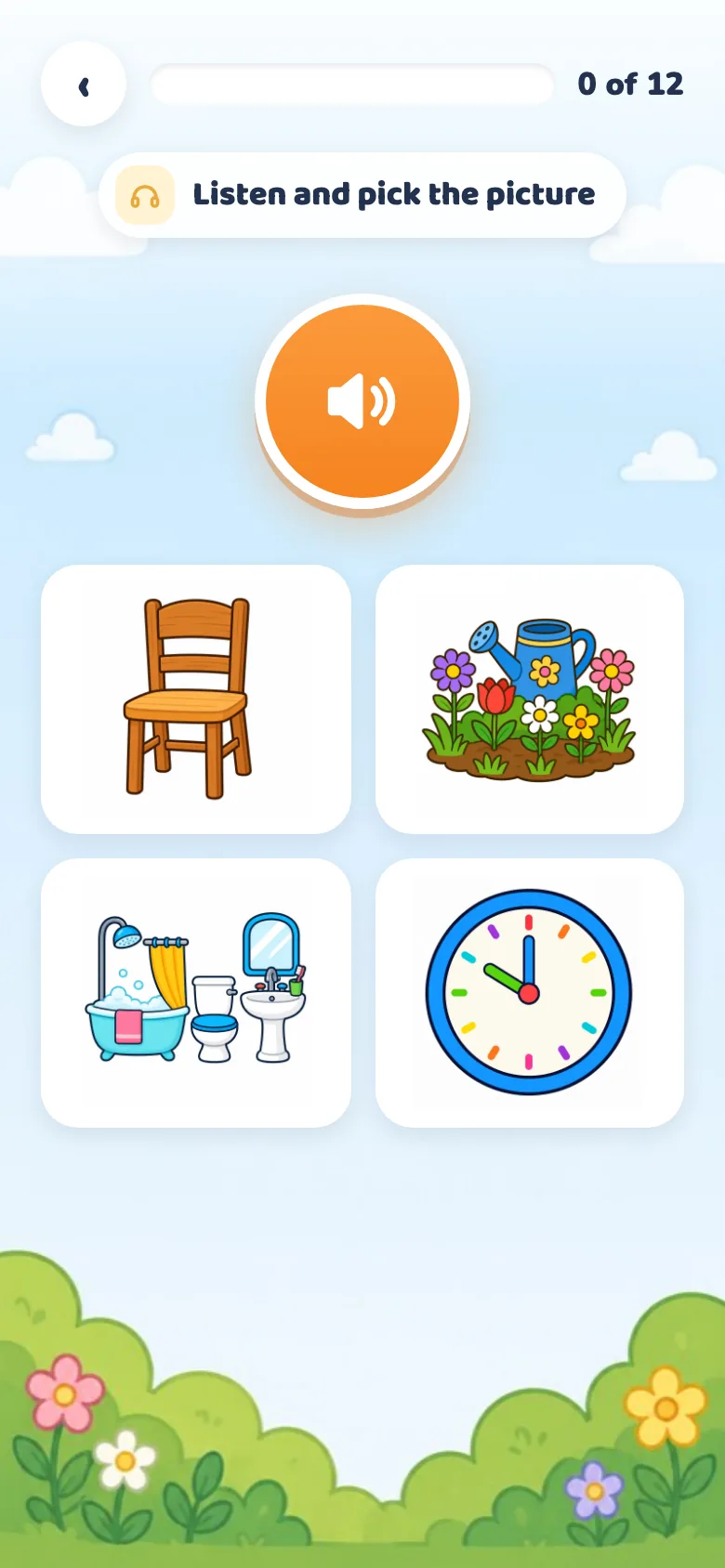
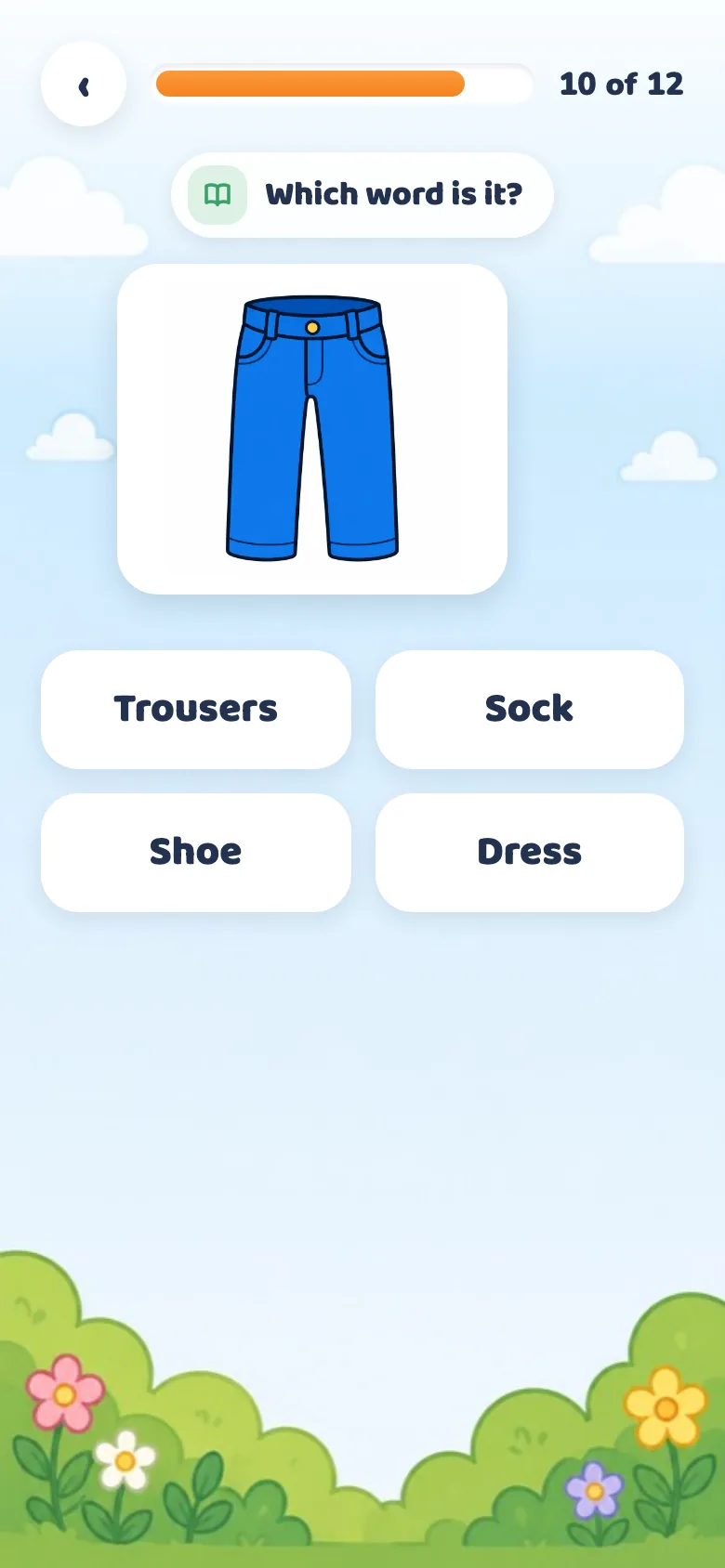
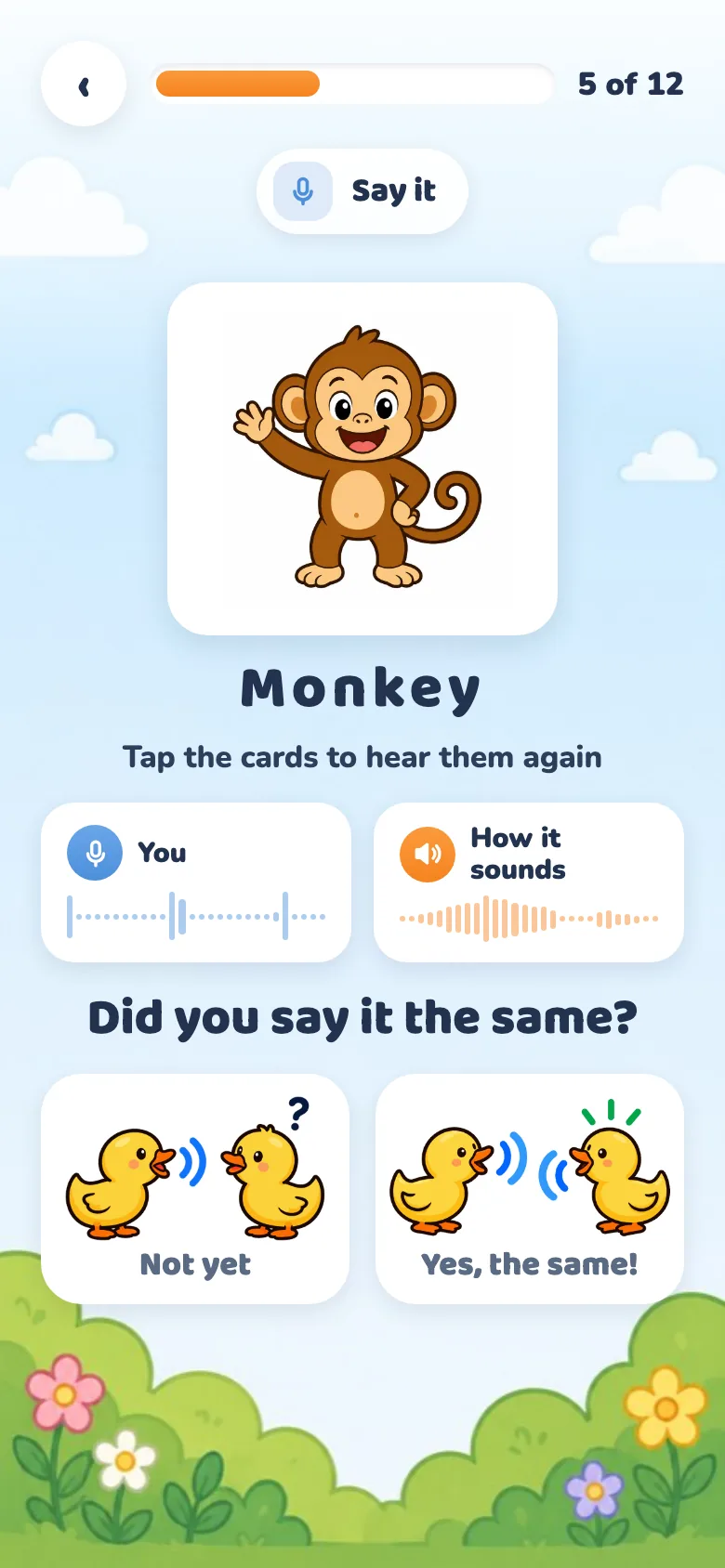
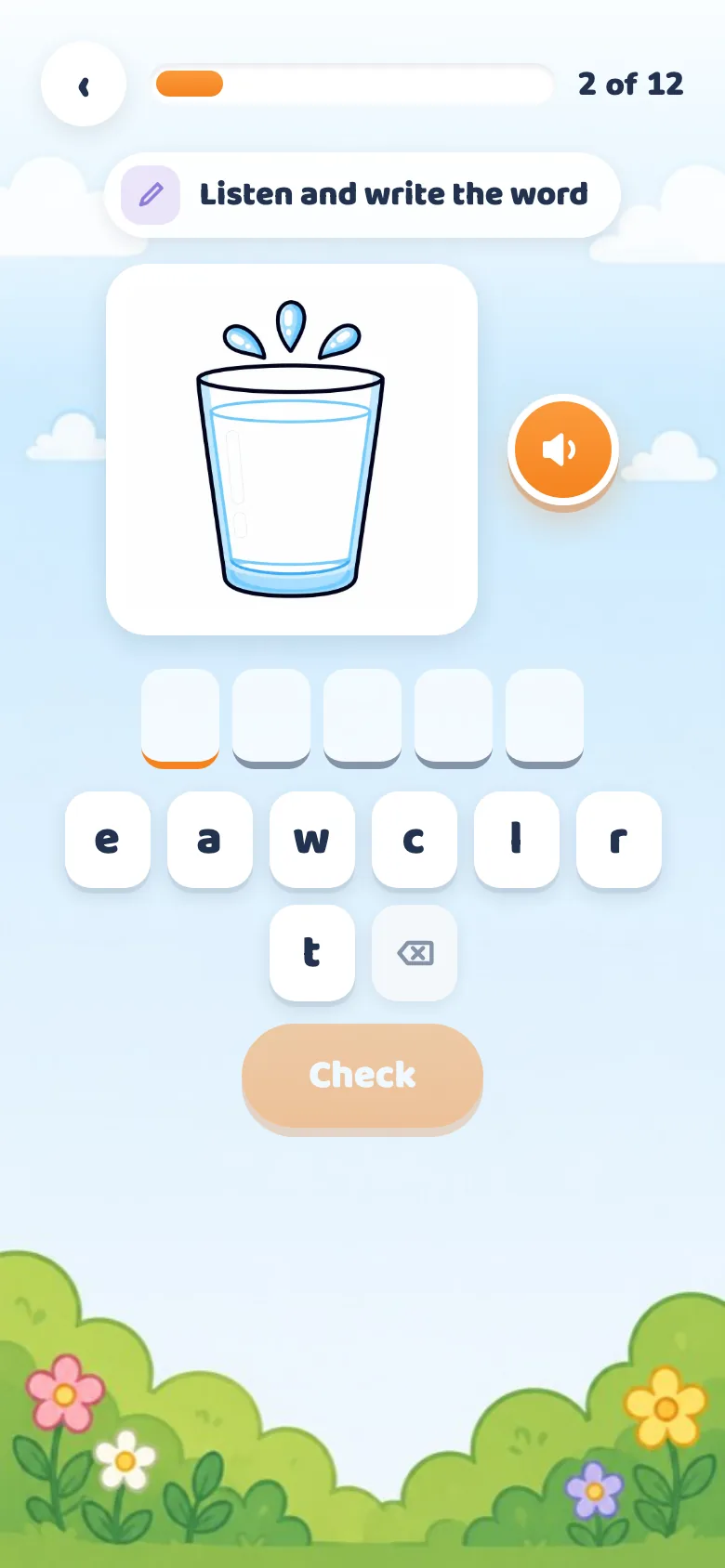
First they hear it, and the other ways open up as they get to know it: they read it once they start to recognise it by ear, say it once they recognise it well, and write it once they read it well. With the first words it moves faster, so there's variety from day one.
In Say it, the app never corrects. Whether they said it right is up to you: on their own, or with a sibling or an adult listening along. The recording never leaves the device. And if they can't read yet, the course works with listening and saying only: written words come in whenever you want.
It comes back a few days later
When a child gets a word right, Parauling brings it back a few days later and, each time they get it right on another day, the wait grows longer. Miss it and it comes back more often, until they get it right a few times in a row. Nobody has to decide what to revise: that's where each day's plan comes from.
As they move on, the day's time goes to the words at their level: the ones far below it stop being revised.
Memory research has found two things many times over. First, revising on different days helps people remember more than revising everything at once.1 There are fewer studies with children, but they point the same way: in one of them, 8- and 9-year-olds in the Netherlands remembered new words better when they had practised them on different days.2 Second, having to recall a word helps more than looking at it again, and this has been seen in primary-school children too.3 That's why Parauling always asks.
Almost all of this research is with adults, and nobody knows for sure how long children should wait between one review and the next. So we don't give you a number: the app spaces out each word's reviews according to what they get right and wrong.
It starts at the right level
If they already know a bit, a ten-word test on the first day puts them at their level, so they don't repeat what they already know.
An album that grows, and a duckling every day
Every word learned is a card with its picture. Once they master it in all four ways, the card turns gold. The collections fill up, and every ten cards they level up.
The duckling is earned on any day the rounds get done. There are no streaks: skip a day and they lose no duckling and no progress.
What you decide
You don't need to know the language to help: the app picks what comes up each day and, when there's a decision to make, the adults area brings it to you with a button. For example, once they recognise enough words by ear, it offers to turn on Reading.
In the course settings you choose which ways they practise, the help with writing and how hard you want it, and in the profile settings, whether they read in upper or lower case. And in "How are they doing?" you see how their vocabulary grows and where they get stuck.
Sources
-
Cepeda, Pashler, Vul, Wixted and Rohrer (2006). Distributed practice in verbal recall tasks: A review and quantitative synthesis. Psychological Bulletin, 132(3), 354-380.
-
Goossens, Camp, Verkoeijen, Tabbers and Zwaan (2012). Spreading the words: A spacing effect in vocabulary learning. Journal of Cognitive Psychology, 24(8), 965-971.
-
Karpicke, Blunt and Smith (2016). Retrieval-based learning: Positive effects of retrieval practice in elementary school children. Frontiers in Psychology, 7, 350.